
Acupuncture for Arthritis and Joint Pain in Melbourne
Arthritis can cause joint pain, stiffness, swelling and restricted movement. Whether you're experiencing osteoarthritis, rheumatoid arthritis, reactive arthritis or another form of inflammatory arthritis, you may be exploring additional approaches to pain management.
Perhaps you have arthritis in your neck, spine, hips, knees, hands or ankles, or have been told you have degenerative joint changes.
I'm Michael Warren, a registered acupuncturist. At my Chinese medicine clinic in Coburg, in Melbourne's northern suburbs, I offer acupuncture for arthritis-related pain and joint stiffness, drawing upon traditional Chinese medicine and contemporary clinical knowledge.
What happens when you book?
Listen and assess. We'll discuss your joint pain, stiffness, medical history and everyday activities.
Consider an individual approach. We'll discuss acupuncture as a pain management option, considering your symptoms and existing healthcare.
Agree on a practical plan. We'll discuss your priorities, relevant advice and when to reassess.
New or unexplained joint swelling warrants medical assessment. A suddenly hot, painful and swollen joint requires urgent medical attention.
Want more information first? Explore arthritis, joint degeneration, acupuncture and Chinese medicine below.
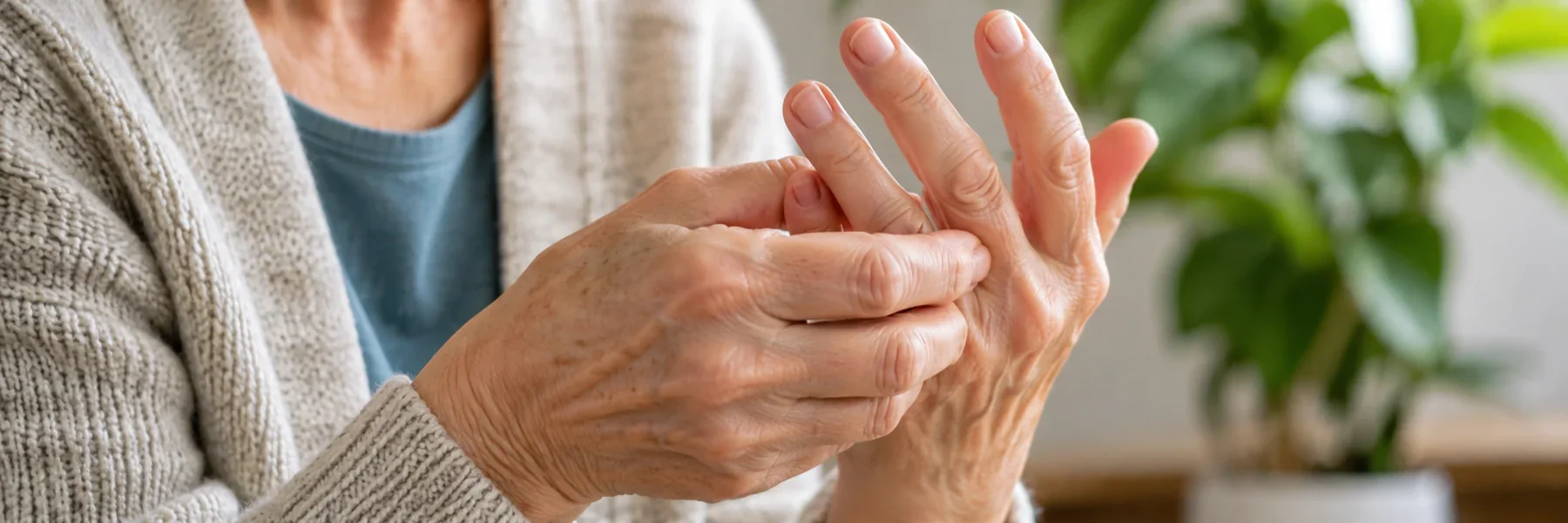
What is arthritis?
Arthritis describes a group of conditions affecting the joints. Common arthritis symptoms include pain, tenderness, swelling, morning stiffness and reduced mobility.
When someone tells me they have arthritis, they're often referring to osteoarthritis. However, there are important differences between osteoarthritis and inflammatory conditions such as rheumatoid arthritis.
Chinese medicine has its own traditional framework for understanding painful and stiff joints, which includes a group of disorders known as Bi syndrome.
Osteoarthritis and joint degeneration
Osteoarthritis (OA), sometimes called degenerative or wear-and-tear arthritis, is the most common form of arthritis. It involves changes throughout the joint, including cartilage, bone and surrounding tissues.
Although osteoarthritis can involve inflammation, its underlying mechanisms differ from those of autoimmune inflammatory arthritis.
Factors associated with osteoarthritis include:
Increasing age and previous joint injuries.
Repeated or excessive mechanical loading.
Genetics and other individual factors.
Increased body weight, particularly for weight-bearing joints.
The extent of joint degeneration does not always correspond with the severity of pain.
Knee arthritis
Knee osteoarthritis can cause pain and stiffness when walking, climbing stairs, squatting or getting out of a chair. Some people experience swelling following physical activity.
Read more about my approach to Acupuncture for Knee Osteoarthritis.
Hip arthritis
Arthritis in the hips can cause groin, thigh or buttock pain, making walking, putting on shoes and getting in and out of a car more difficult.
Read more about Acupuncture for Hip and Glute Pain.
Arthritis in the hands and fingers
Hand arthritis can cause stiffness, tenderness and difficulties gripping objects or opening jars. Osteoarthritis at the base of the thumb is also common.
Tendon problems and nerve compression can cause overlapping symptoms. Read more about Carpal Tunnel Syndrome, Wrist and Hand Pain.
Ankle and foot arthritis
Arthritis in the ankles and feet can cause joint pain, stiffness and difficulties walking or standing. Ankle osteoarthritis is often associated with previous injuries, while inflammatory arthritis can also affect these joints.
Hip and knee replacements
Advanced osteoarthritis can involve cartilage loss, joint space narrowing and osteophytic changes, including the development of osteophytes (bone spurs). Rheumatoid arthritis can also result in significant joint damage.
When joint pain and restricted mobility substantially affect everyday life despite other healthcare approaches, a total hip replacement or total knee replacement may be recommended.
I welcome people considering acupuncture as part of their pain management approach while awaiting joint replacement surgery, alongside the care they're receiving from their medical and surgical teams.
Inflammatory arthritis
Inflammatory arthritis describes conditions in which inflammation plays a central role. Some involve autoimmune processes, while others develop in response to infection or other mechanisms.
Rheumatoid arthritis
Rheumatoid arthritis (RA) is an autoimmune condition involving joint inflammation that can also affect other parts of the body.
Common symptoms include:
Painful, warm or swollen joints.
Prolonged morning stiffness.
Symptoms often affecting both hands, wrists or feet.
Fatigue and arthritis flare-ups.
Early diagnosis and medical management are important to limit joint damage.
I welcome people living with rheumatoid arthritis who wish to discuss acupuncture as an additional pain management option alongside their medical care.
Reactive arthritis
Reactive arthritis can develop in the weeks following certain gastrointestinal or genitourinary infections, sometimes after the original infection has settled.
It commonly affects the knees, ankles, feet and tendon attachments. Eye inflammation and urinary symptoms can also occur.
Most people recover without permanent joint damage, although persistent or recurring reactive arthritis can sometimes result in joint damage. Medical assessment is important.
Osteoarthritis vs rheumatoid arthritis vs reactive arthritis
Osteoarthritis: changes throughout the joint; commonly knees, hips and hands. Onset often gradual, with typically brief morning stiffness and restricted movement.
Rheumatoid arthritis: autoimmune inflammation; commonly hands, wrists and feet. Onset may be gradual or sudden, with often prolonged morning stiffness, fatigue and flare-ups.
Reactive arthritis: inflammation following infection; commonly knees, ankles and feet. Onset often follows infection, morning stiffness varies, and eye or urinary symptoms can occur.
These are typical patterns rather than diagnostic rules. Symptoms can overlap.
Other types of arthritis
Psoriatic arthritis: inflammatory arthritis associated with psoriasis that can affect joints, tendons and the spine.
Ankylosing spondylitis and axial spondyloarthritis: inflammatory conditions primarily affecting the spine and sacroiliac joints.
Gout: arthritis caused by urate crystals accumulating within a joint, potentially resulting in sudden pain, redness and swelling.
Arthritis and spinal degeneration
Arthritis in the spine can affect the joints of the neck and lower back. You may have been told you have spinal arthritis, spondylosis, facet joint arthritis or other degenerative changes.
Neck arthritis and cervical spondylosis
Arthritis in the neck can be associated with neck pain, stiffness and restricted movement. Cervical spondylosis describes degenerative changes affecting the joints, discs and other structures of the cervical spine.
Read more about Acupuncture for Neck and Shoulder Pain.
Spinal arthritis and lumbar spondylosis
Arthritis in the lower back may involve degenerative changes affecting the facet joints of the spine.
An X-ray or MRI report may include terms such as:
Lumbar spondylosis.
Facet joint arthritis or facet joint arthropathy.
Degenerative disc disease.
Osteophytes, bone spurs and osteophytic changes.
These describe different changes affecting the spine. Not all spinal degeneration is arthritis.
Read more about my approach to Acupuncture for Back Pain.
Does spinal degeneration always cause pain?
No. Degenerative changes are frequently found on scans of people without pain. Imaging findings do not necessarily explain the severity of someone's symptoms.
Muscles, nerves, previous injuries and physical activity can also contribute to neck and lower back pain.
When considering an acupuncture approach, I take into account your symptoms, movement and everyday activities alongside relevant imaging findings.
Living with arthritis
Exercise and joint mobility
Appropriate physical activity is important in managing many forms of arthritis. Maintaining muscular strength, mobility and fitness can help people remain active and independent.
Being told you have joint degeneration does not automatically mean you should stop moving. Exercise should be adapted to your condition and circumstances.
Joint pain and arthritis flare-ups
Arthritis symptoms can fluctuate with physical activity, sleep, fatigue and other health concerns. Increased discomfort does not always indicate further structural damage.
However, new joint swelling or worsening inflammatory symptoms warrant medical review.
When should joint pain be medically assessed?
Persistent unexplained swelling, prolonged morning stiffness or pain affecting multiple joints warrants medical assessment.
A suddenly hot, painful and swollen joint requires urgent medical attention, even without fever. New eye pain, redness, light sensitivity or changes in vision also require urgent assessment, particularly with inflammatory arthritis.
For further information on arthritis and living with joint pain, see Arthritis Australia.
Acupuncture and Chinese medicine for arthritis
Chinese medicine and Bi syndrome
In traditional Chinese medicine, painful, stiff and restricted joints are often considered within a group of disorders known as Bi syndrome (Bi Zheng), commonly translated as painful obstruction syndrome.
The symptoms associated with Bi syndrome overlap with what Western medicine describes as osteoarthritis, rheumatoid arthritis and other painful musculoskeletal conditions.
Traditional Chinese medicine differentiates between patterns involving wind, cold, dampness, heat and stagnation. These patterns take into account characteristics such as:
Whether pain is fixed or moves between joints.
Stiffness, swelling or a sensation of heaviness.
How symptoms vary with temperature, movement and rest.
The person's broader health and other symptoms.
These traditional concepts provide a different framework for understanding symptoms alongside contemporary medical knowledge.
My approach to acupuncture for arthritis-related pain
My approach to acupuncture for joint pain draws upon Chinese medicine and contemporary clinical knowledge, with a focus on pain management, stiffness, mobility and everyday activities.
Depending on your individual circumstances, I'll discuss traditional acupuncture, electroacupuncture and relevant lifestyle advice.
Where appropriate, we can also discuss other Chinese medicine approaches, including moxibustion or Chinese herbal medicine, taking into account your medications and existing healthcare.
I welcome people already receiving care from their GP, rheumatologist, physiotherapist or orthopaedic surgeon.
Acupuncture does not replace medical management of inflammatory arthritis or prescribed medication for controlling disease activity.
Read more about my broader approach to Acupuncture for Pain Management.
Frequently asked questions
What is the difference between arthritis and osteoarthritis?
Arthritis describes a group of joint conditions. Osteoarthritis is one type involving changes to cartilage, bone and other joint tissues.
Can arthritis occur in younger people?
Yes. Inflammatory arthritis can develop at different ages, while osteoarthritis can also occur in younger people, particularly following joint injuries.
What does bone-on-bone arthritis mean?
It generally describes substantial loss of joint space associated with cartilage changes. It does not necessarily indicate the severity of pain or movement difficulties.
Is osteoarthritis an inflammatory condition?
Osteoarthritis can involve inflammation, but its underlying mechanisms differ from autoimmune inflammatory conditions such as rheumatoid arthritis.
Can acupuncture help with arthritis pain?
Research into acupuncture for osteoarthritis has focused particularly on pain and physical function. Findings vary between studies and the types of arthritis investigated. During a consultation, we can discuss whether acupuncture is an appropriate option for your circumstances.
Can I have acupuncture while taking arthritis medication?
I'll consider your medications, medical history and any relevant precautions when discussing an individual approach.
Areas We Serve
Based in Coburg, I welcome patients from across Melbourne, including Melbourne's northern suburbs. People visit from Brunswick, Pascoe Vale, Preston, Fawkner, Thornbury, Reservoir, Glenroy and Broadmeadows, as well as further north from Lalor and Epping. You're welcome wherever you're travelling from.
Explore local area pages: Coburg · Brunswick · Pascoe Vale · Preston · Thornbury · Fawkner · Other Northern Suburbs.
See my Fees and Opening Hours.
Questions before booking? You're welcome to call me on ☎ (03) 9041 6569.
Research and further reading
Research into acupuncture for arthritis has focused particularly on pain and physical function, with findings varying between different types of arthritis and comparison groups.
Osteoarthritis and chronic joint pain
A 2010 Cochrane review of 16 trials involving 3,498 participants reported improvements in pain and physical function compared with waiting-list controls. Differences compared with sham acupuncture were smaller and did not meet the review's thresholds for clinical importance.
A 2018 meta-analysis of 39 trials involving 20,827 participants across several chronic pain conditions reported improvements in the osteoarthritis subgroup compared with both sham acupuncture and no-acupuncture controls, with larger differences against no acupuncture.
Knee osteoarthritis
A 2024 systematic review of 80 trials involving 9,933 participants reported improvements in pain and physical function compared with several control interventions, although the certainty of important findings was very low.
Another 2024 review reported that some improvements persisted for several months after acupuncture, with results varying between comparison groups.
Clinical effect and contributing factors of acupuncture for knee osteoarthritis (2024)
Durable Effects of Acupuncture for Knee Osteoarthritis (2024)
Further research is discussed on my Acupuncture for Knee Osteoarthritis page.
Hip osteoarthritis
A 2018 Cochrane review of six trials involving 413 participants found little or no difference in pain and physical function compared with sham acupuncture. One unblinded trial reported improvements when acupuncture was added to routine medical care, although confidence in this finding was limited.
Rheumatoid arthritis and inflammatory arthritis
A 2022 meta-analysis of 11 trials involving 796 participants reported improvements in pain and some functional measures across pooled comparisons. However, pain outcomes did not differ significantly from sham acupuncture.
An earlier Cochrane review found insufficient evidence to draw firm conclusions. Research specific to reactive arthritis remains limited.
Arthritis in the hands and wrists
A 2022 systematic review of hand and wrist pain reported differing results between conditions. One rheumatoid arthritis trial reported improvements in pain and function, while a small trial involving thumb-base osteoarthritis did not demonstrate significant improvements.
Chinese medicine terminology and perspectives
WHO international standard terminologies on traditional Chinese medicine
Osteoarthritis and Chinese Medicine: An Overview of Theories and Evidence
Patient information
Research references are included to help readers understand the evidence, including its limitations. They are not a promise of individual treatment outcomes.
Last updated: 28 November 2026