
Acupuncture for Insomnia or Broken Sleep?
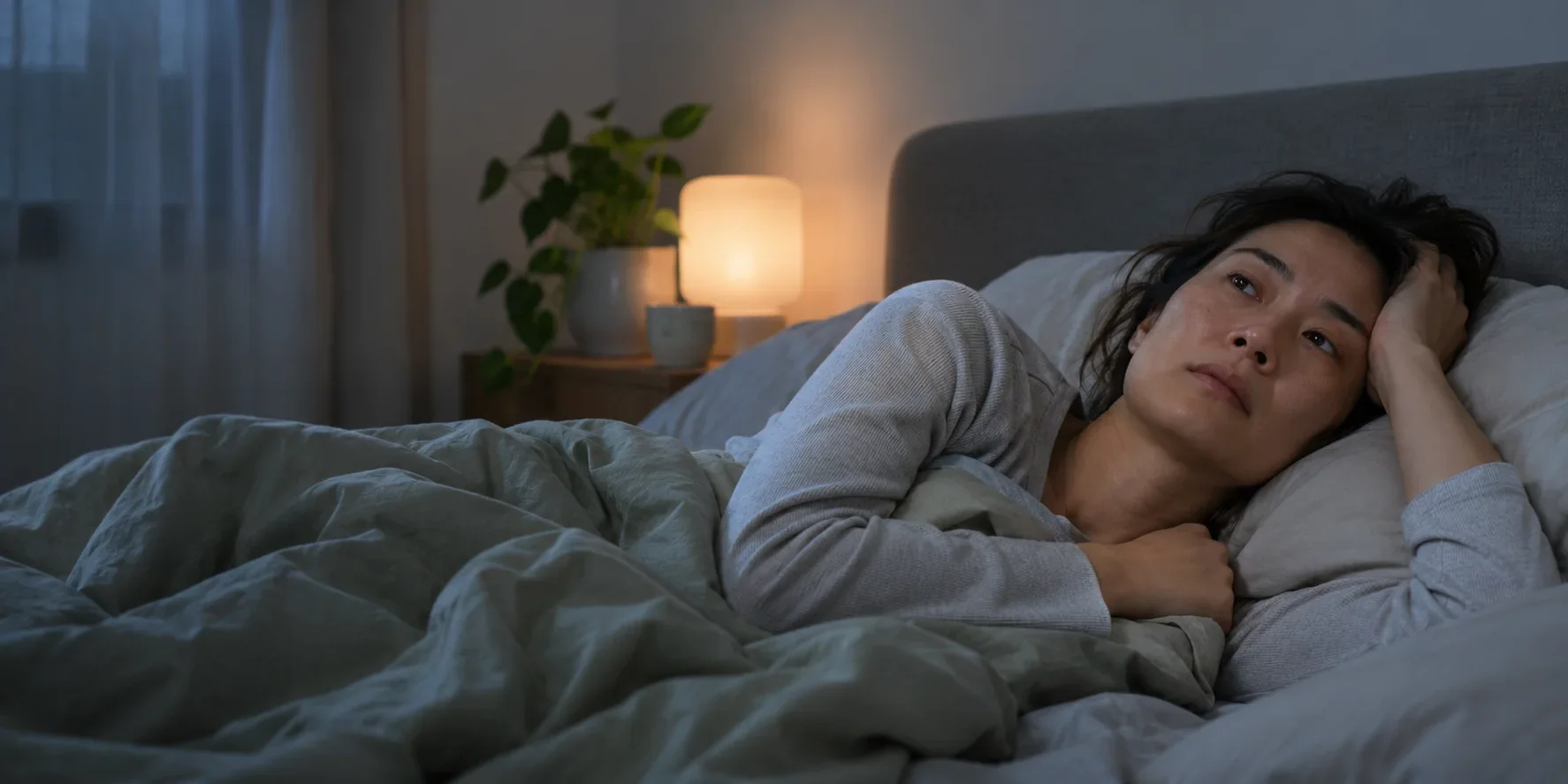
Finding it hard to fall asleep? Waking repeatedly during the night, or waking much earlier than you'd like? Perhaps you sleep for several hours but still feel tired when morning comes.
Sleep difficulties can affect much more than the night itself. They may leave you feeling exhausted, frustrated, distracted or worried about whether you'll sleep the following evening. Some people also experience daytime fatigue, problems concentrating or what they describe as brain fog, although these symptoms can have other causes too.
I understand how challenging persistent insomnia can be. I've experienced insomnia myself for more than 35 years, and it's something that has required ongoing management throughout my life. I know how frustrating it can be when sleep doesn't come easily, and how its effects can extend into everyday life.
I'm Michael Warren, a registered acupuncturist and Chinese medicine practitioner with over 15 years of clinical experience. At Coburg Chinese Medicine, I offer personalised, one-on-one acupuncture consultations where we can discuss your sleep concerns, general health and the care you're already receiving.
My clinic is at 197 Sydney Road, Coburg, welcoming people from Brunswick, Preston, Pascoe Vale and surrounding northern Melbourne suburbs, as well as people travelling from elsewhere in Melbourne.
What happens when you book?
- We discuss your sleep difficulties. I'll listen to your sleep patterns—including trouble falling asleep, waking during the night or waking too early—how long this has been happening, its effect on daily life and any relevant care you're already receiving.
- We consider an individual approach. I'll explain what acupuncture treatment may involve, how it might fit alongside other care for insomnia or disrupted sleep, and whether further medical assessment could be useful.
- We agree on an initial treatment approach and review progress. We'll discuss what that approach may involve, any relevant advice, and a suitable time to reassess your sleep concerns and whether further appointments may be appropriate.
Chinese herbal medicine or other approaches can also be discussed if relevant, appropriate and available.
Want to know more? Explore common sleep difficulties, possible causes, acupuncture, research and booking details below.
On this page
About insomnia · Causes & perimenopause · Acupuncture & consultation · Research & other care · Frequently asked questions · Booking
Understanding insomnia and disrupted sleep
People use the word insomnia to describe several different experiences. These can include:
- Difficulty falling asleep: spending a long time awake after going to bed, sometimes despite feeling tired.
- Difficulty staying asleep: waking repeatedly or remaining awake for extended periods during the night.
- Early morning waking: waking substantially earlier than intended and being unable to return to sleep.
- Unrefreshing sleep: sleeping but still feeling tired, although this can also have causes other than insomnia.
Sleep difficulties may be short-lived or persist over months or years. For some people, they come and go. For others, the effect on concentration, mood, work, family life or everyday activity becomes an important part of the problem.
It's worth distinguishing occasional poor sleep from ongoing insomnia, particularly when daytime functioning is affected.
What might contribute to sleep difficulties?
There isn't always one obvious explanation.
Sleep can be affected by changing work schedules, stress, pain, health conditions, medicines, caffeine, alcohol, hormonal changes and the sleeping environment. Sometimes several factors occur together.
A person who wakes because of back or neck pain may have a different experience from someone whose mind remains active long after going to bed.
Perimenopausal insomnia is another important example. During perimenopause, changes in sleep may occur alongside hormonal fluctuations, night sweats, hot flushes and other symptoms. Sleep difficulties can also continue during menopause. For some people, fatigue and brain fog are part of this wider experience, although they shouldn't automatically be attributed to poor sleep alone.
Others notice changes in sleep during periods of illness or after major life events. Some symptoms that initially seem like insomnia may also warrant assessment for other sleep or medical conditions.
If stress or physical discomfort is affecting your sleep, you can also read more on my Stress, Anxiety and Physical Health page.
The important point is not to assume that every sleep difficulty has the same cause—or needs the same response.
Acupuncture, Chinese medicine and sleep difficulties
Traditional Chinese medicine has long considered sleep an aspect of a person's wider health. During a Chinese medicine consultation, it's common to ask about sleep patterns alongside physical symptoms, digestion, energy levels, medical history and other relevant circumstances.
I value that broader conversation in my practice. It gives people space to describe what they're experiencing rather than reducing the consultation to a single symptom.
For people exploring acupuncture for insomnia in Melbourne, I think it's important to distinguish three questions:
- What is happening with your sleep, and does it need medical assessment?
- What healthcare options are already available or being used?
- Is there an appropriate role for an acupuncture consultation in your individual circumstances?
An acupuncture consultation is an opportunity to discuss these questions and make an informed decision. It does not mean that acupuncture is necessarily suitable for every person experiencing insomnia.
If you're new to acupuncture, you can read more about what acupuncture involves at my Melbourne clinic.
Chinese herbal medicine may also be discussed if relevant, appropriate and available, taking account of medicines, medical conditions and potential interactions.
What does research say about acupuncture and insomnia?
Acupuncture has been investigated for insomnia in clinical trials, systematic reviews and meta-analyses. The findings are not uniform, and research quality matters.
A Cochrane review of studies involving people with insomnia found that the available research had substantial methodological limitations. These included differences in the treatments used, the participants studied and the ways sleep outcomes were measured. The reviewers could not draw reliable conclusions supporting or refuting acupuncture as a treatment for insomnia.
More recent systematic reviews have reported some favourable findings, particularly in self-reported sleep quality. However, results based on people's assessments of their sleep are not necessarily the same as improvements measured objectively. Differences between genuine and sham acupuncture, study quality, follow-up and the significance of reported changes remain important questions.
For that reason, I don't think it is appropriate to take an encouraging result from an individual study and present it as proof that acupuncture will improve someone's sleep. Equally, it is reasonable to explain what researchers have investigated, including where findings have been positive and where uncertainty remains.
My approach is to discuss the available evidence and its limitations so that people can make informed choices, rather than promising a particular outcome.
When other healthcare may be important
If you're experiencing persistent insomnia, marked daytime sleepiness or sleep difficulties that are interfering with your health or daily activities, a discussion with your GP is worthwhile.
Symptoms such as loud snoring, witnessed pauses in breathing during sleep or significant daytime sleepiness may need assessment for other sleep disorders. Changes in medication, mood or general health may also be relevant.
There are established medical and psychological approaches to insomnia. An acupuncture consultation should not replace necessary assessment or treatment.
If you're already receiving healthcare for sleep difficulties, please continue that care and don't change prescribed medicines without advice from your GP or treating clinician.
Book an Acupuncture Consultation
Frequently asked questions
Can I book an acupuncture consultation if I'm having trouble sleeping?
Yes. You're welcome to arrange an initial acupuncture consultation to discuss your sleep concerns, relevant medical history and whether acupuncture would be appropriate to consider. The consultation doesn't assume that acupuncture is the right option for everyone.
Can acupuncture help with insomnia?
Acupuncture has been studied for insomnia, but the findings are mixed and the quality of the evidence varies. Some reviews report favourable results on particular sleep measures, while others identify substantial uncertainty. I would rather discuss those findings accurately than suggest a benefit that cannot be reliably promised.
Can perimenopause contribute to insomnia or broken sleep?
Sleep difficulties can occur during perimenopause, sometimes alongside night sweats, hot flushes or other changes. They can also have unrelated causes. A GP can help assess persistent or troublesome symptoms, and we can discuss your wider health concerns during an acupuncture consultation.
What if I wake up several times during the night?
Frequent night waking can occur for different reasons. During a consultation, we can discuss the pattern you've noticed, relevant symptoms and whether a GP or another healthcare professional should be involved.
How many acupuncture sessions would I need?
I don't prescribe a fixed number of sessions simply because someone has sleep difficulties. If acupuncture is appropriate and you decide to proceed, we can discuss the proposed care and review it according to your circumstances.
Can I continue my existing sleep medication or other treatment?
Please continue prescribed treatment unless your GP or treating clinician advises otherwise. It's helpful to tell me about your medications and other healthcare so that any discussion of acupuncture or Chinese medicine takes those factors into account.
What if I want to talk about my sleep without committing to acupuncture?
An initial consultation allows us to discuss your concerns and the available options. If acupuncture doesn't seem appropriate, or you decide it isn't for you, we can discuss the next steps without assuming treatment must proceed.
Discuss your sleep concerns at Coburg Chinese Medicine
If you've been experiencing insomnia, broken sleep or difficulty falling asleep and would like to discuss whether acupuncture belongs among the options you're considering, you're welcome to book a consultation.
Having lived with insomnia for much of my life, I appreciate that sleep difficulties aren't always straightforward and that people's experiences and priorities can differ.
I'll take time to understand your concerns, explain my approach and discuss suitability, alternatives and any necessary referral.
Coburg Chinese Medicine
197 Sydney Road, Coburg VIC 3058
Phone: (03) 9041 6569
Book an Acupuncture Consultation
Research and further reading
- Cheuk DKL, Yeung W-F, Chung K, Wong V. (2012). Acupuncture for insomnia. Cochrane Database of Systematic Reviews. Read the review.
- Yu Y, et al. (2025). Acupuncture for chronic insomnia disorder: a systematic review with meta-analysis and trial sequential analysis. Frontiers in Neurology. Read the research.
Research references are included to help readers understand the evidence, including its limitations. They are not a promise of individual treatment outcomes.
Last updated: 21 November 2026
Areas We Serve
Based in Coburg, I welcome patients from across Melbourne, including Melbourne's northern suburbs. People visit from Brunswick, Pascoe Vale, Preston, Fawkner, Thornbury, Reservoir, Glenroy and Broadmeadows, as well as further north from Lalor and Epping. You're welcome wherever you're travelling from.
Explore local area pages: Coburg · Brunswick · Pascoe Vale · Preston · Thornbury · Fawkner · Other Northern Suburbs.
Questions before booking? You’re welcome to call me on ☎ (03) 9041 6569.