
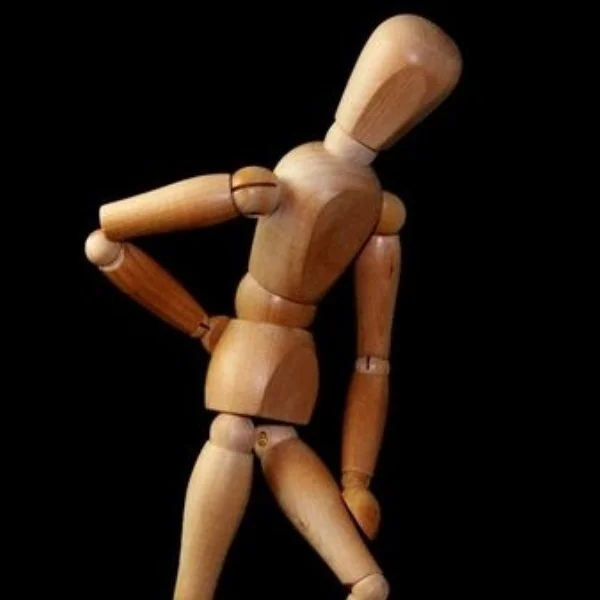
Sciatica can be uncomfortable, frustrating and sometimes quite disruptive to everyday life. Pain may travel from your lower back or buttock down one leg, making it difficult to sit comfortably, sleep, work or enjoy your usual activities.
At Coburg Chinese Medicine, I see people experiencing sciatica, lower back pain and other nerve-related symptoms. My approach is to understand what you're experiencing, consider any existing diagnosis or investigations, and discuss whether acupuncture is an appropriate option alongside your other healthcare.
Whether your symptoms are relatively recent or have been troubling you for some time, you're welcome to make an appointment to discuss your circumstances.
What is sciatica?
Sciatica describes pain associated with irritation or compression of the nerve roots that contribute to the sciatic nerve. These nerves originate in the lower back, with the sciatic nerve travelling through the buttock and down the leg.
Unlike ordinary muscular back pain, sciatica often produces symptoms that travel beyond the lower back. These may include shooting, burning or electric-like pain, tingling, numbness and sometimes weakness in the affected leg.
Symptoms vary considerably. Some people experience mild discomfort, while others find sitting, bending, walking or certain movements particularly difficult. Sciatica commonly affects one leg, although symptoms can sometimes involve both.
What causes sciatica?
Sciatica can have several underlying causes. Common possibilities include:
Herniated or bulging lumbar discs: Disc material may irritate or compress a spinal nerve root.
Spinal stenosis: Narrowing of spaces around the spinal nerves can produce nerve-related symptoms.
Degenerative spinal changes: Age-related changes, including bone spurs, may contribute to nerve irritation.
Spondylolisthesis: Changes in the alignment of the vertebrae can sometimes affect nearby nerves.
An important distinction is that not all pain travelling from the buttock into the leg is true sciatica. Conditions affecting the hip and surrounding muscles can sometimes produce similar symptoms.
One example is piriformis syndrome, where irritation of the sciatic nerve around the deep buttock muscles may cause pain extending into the leg. This is less common than sciatica arising from the lumbar spine, and distinguishing between these possibilities can be important when considering treatment.
If you're experiencing lower back pain without the characteristic nerve-related leg symptoms, you may also find my Acupuncture for Back Pain page useful.
Acupuncture for sciatica and sciatic nerve pain
People consider acupuncture for sciatica for different reasons. Some are exploring options for persistent discomfort, while others want an additional approach alongside medical care or physiotherapy.
Acupuncture has been investigated for sciatica, including in people with chronic nerve-related leg pain associated with a herniated lumbar disc. Some research findings are encouraging, although the overall evidence remains uncertain and clinical recommendations differ.
Acupuncture does not repair a herniated disc or necessarily resolve the underlying cause of nerve compression. Whether it is suitable depends on your symptoms, medical history and individual circumstances.
My approach is practical and straightforward. We can discuss what acupuncture involves, its limitations and whether it has a reasonable place in your overall care. You can also read more about my broader approach to acupuncture for pain management.
What happens during your acupuncture consultation?
Your initial consultation involves discussing how your symptoms began, where you experience pain or altered sensation, and what makes things better or worse. I'll also ask about your general health, previous injuries and any medical assessments or scans you've had.
Depending on your circumstances, treatment may involve traditional acupuncture or electroacupuncture. I may also discuss other approaches, such as cupping, where appropriate.
I'll explain the proposed treatment, relevant precautions and what we can reasonably expect before proceeding. There isn't a fixed number of acupuncture appointments suitable for everybody, and we can review whether continuing treatment makes sense as we go.
If you've already seen a GP, physiotherapist or specialist, that information is useful. I see acupuncture as something to consider within your broader healthcare rather than as a replacement for appropriate medical investigation or treatment.
When should sciatica be medically assessed?
Many episodes of sciatica improve over time, but new or persistent symptoms should be assessed by an appropriate healthcare professional.
Seek emergency medical attention if you develop new difficulty passing urine, loss of bladder or bowel control, numbness around the genitals or saddle area, or severe or rapidly progressing weakness in the legs. These can be signs of serious nerve compression.
New or worsening weakness, significant changes in sensation or severe persistent symptoms also warrant prompt medical assessment.
Sciatica acupuncture in Coburg and Melbourne's northern suburbs
Coburg Chinese Medicine is a small, single-practitioner clinic offering acupuncture and Chinese medicine consultations in Coburg, Melbourne.
I see patients from Coburg, Coburg North, Brunswick, Pascoe Vale, Pascoe Vale South, Preston, Thornbury, Fawkner and surrounding northern suburbs, as well as people travelling from elsewhere in Melbourne.
Running a small clinic means you'll see the same practitioner throughout your care. I aim to provide clear explanations, practical advice and time to discuss your concerns, whether you're familiar with acupuncture or considering it for the first time.
For information about appointment costs and clinic availability, visit the Fees & Opening Hours page.
Book Online — Coburg Chinese Medicine
Frequently asked questions
Can I have acupuncture if I have a herniated disc?
A herniated disc doesn't automatically rule out acupuncture. However, it's important to consider your symptoms, any neurological changes and medical advice you've received. Acupuncture does not repair the disc itself.
Can acupuncture be used alongside physiotherapy or other treatment?
Acupuncture may be considered alongside other healthcare, depending on your circumstances. It's helpful to know which treatments you're already receiving so that we can discuss an appropriate approach.
Do I need an MRI before booking acupuncture?
Not necessarily. Many people with sciatica don't need immediate imaging. Your GP or another appropriate healthcare professional can determine whether an MRI or other investigation is needed.
How many acupuncture sessions will I need for sciatica?
There isn't a standard course of appointments suitable for everyone. This depends on your symptoms, medical history and response to treatment. We'll discuss a reasonable approach and review it rather than committing you to a predetermined number of sessions.
What does the research say about acupuncture for sciatica?
Research into acupuncture for sciatica has produced some encouraging findings, particularly for chronic sciatica associated with lumbar disc herniation. However, the broader evidence remains uncertain, and findings for one type of sciatica should not automatically be applied to every cause of nerve-related leg pain.
A randomised clinical trial published in JAMA Internal Medicine in 2024 compared acupuncture with sham acupuncture in people with chronic sciatica caused by a herniated lumbar disc. Among the 216 participants included in the analysis, the acupuncture group reported greater improvements in leg pain and physical function at four weeks, with differences persisting at later follow-up.
These results are relevant but do not establish that acupuncture will benefit every person experiencing sciatica. Clinical guidance also differs. For example, the UK's National Institute for Health and Care Excellence (NICE) recommends against offering acupuncture for low back pain with or without sciatica.
It's important to consider the full body of evidence, individual circumstances and appropriate medical care when deciding whether to try acupuncture.
Research references
Tu J-F et al. (2024). Acupuncture vs Sham Acupuncture for Chronic Sciatica From Herniated Disk: A Randomized Clinical Trial. JAMA Internal Medicine, 184(12), 1417–1424.
National Institute for Health and Care Excellence. Low back pain and sciatica in over 16s: assessment and management (NG59).
Book an acupuncture appointment in Coburg
If you're experiencing sciatica or sciatic nerve pain and would like to discuss whether acupuncture might be appropriate for you, you're welcome to book an appointment at Coburg Chinese Medicine.
I offer individual consultations with a practical, straightforward approach, taking into account your symptoms, existing medical care and personal circumstances.