

Does acupuncture work? Understanding the research and evidence
Does acupuncture work? Michael Warren, a registered Melbourne acupuncturist, explains the research, its limitations and why individual assessment matters.
The answer depends on the condition, what you want to improve and what acupuncture was compared with. Some studies find benefits for particular outcomes. For other questions, the evidence is still uncertain.
When I read research, I look at what each group received, how closely the treatment resembled care in practice, and whether the change was large enough to matter in everyday life.
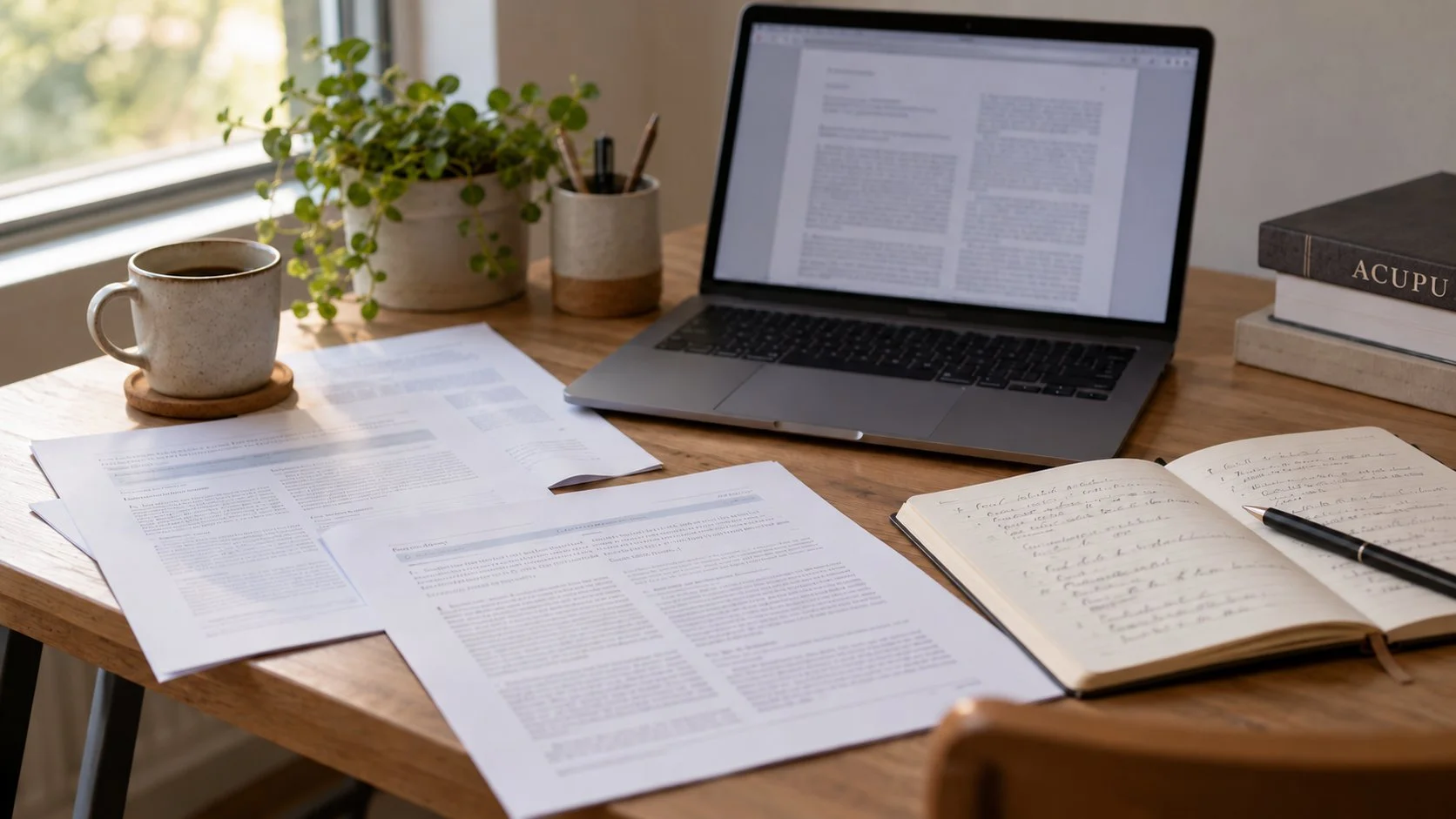
Why is it easy to cherry-pick acupuncture research?
As a clinician, I read research to inform my practice. But to make a fair statement about how well acupuncture works for a particular condition, I need to look across the evidence. That includes studies that found a benefit, those that found little or no difference, and those whose results were too uncertain to draw a conclusion. Even an accurately quoted study can give a misleading impression if I show you only the findings that support one answer. That's cherry-picking.
Assessing the evidence properly can be a research project in its own right. A count of positive and negative studies doesn't tell us whether they were well designed, whether they measured the same thing, or how relevant their findings are to patients.
How do systematic reviews and meta-analyses help?
An individual study collects its own data. A randomised clinical trial assigns people to groups by chance and compares their outcomes.
A systematic review searches for studies addressing a particular question using defined methods. Reviewers assess how the studies were conducted and consider the findings together, including uncertainty.
A meta-analysis combines numerical results statistically when studies are sufficiently comparable. It isn't appropriate to pool every study just because they share the word acupuncture.
Cochrane is an international network that publishes systematic healthcare reviews. Its reviewers assess how confident they are about particular findings. That confidence can differ between outcomes such as pain, headache frequency and everyday function—even for the same condition. How systematic reviews work — Cochrane
Why is blinding difficult in acupuncture trials?
Blinding means keeping people unaware of which treatment group someone is in. Researchers may try to keep participants, outcome assessors or others unaware of the allocation. What someone expects from treatment can affect self-reported outcomes such as pain. In acupuncture trials, practitioners generally know which procedure they're giving, even when participants can be kept unaware. Cochrane Handbook — risk of bias
Researchers use sham acupuncture to create a comparison that feels similar. A blunt needle may press against the skin without piercing it; other trials use shallow needling or different points. A sham that feels too different may reveal the allocation. One that feels similar might also provide some physical stimulation. The result depends partly on what the real and sham procedures have in common. BMJ — designing acupuncture trials
Why compare acupuncture with usual care as well?
A sham comparison asks what the tested acupuncture protocol adds beyond a particular simulated procedure. A usual-care comparison asks what happens when a course of acupuncture is added to the care people already receive.
A three-group trial might compare:
Usual care plus acupuncture.
Usual care plus sham acupuncture.
Usual care alone.
The first two groups help compare the procedures. The first and third help assess the whole additional course of appointments. People generally know whether they're attending extra visits, so expectations, practitioner contact and other differences may influence what they report. BMJ — acupuncture trial design
A real example: In a 2009 study of persistent low back pain, three groups receiving acupuncture or a simulated procedure reported better back-related function after eight weeks than a usual-care group. The study found no clear difference in function between the three procedure groups. In a different Australian trial, adding electroacupuncture or simulated electroacupuncture to pain and medication education did not produce a clear difference in the main outcome, opioid dose. These studies asked different questions, but both show why we need to know what was compared and what was measured. Cherkin and colleagues, 2009 · Zheng and colleagues, 2019
Does the treatment in the trial resemble care in practice?
In my Chinese medicine practice, I look at the person as a whole. I consider their main concern alongside other symptoms, sleep, digestion and health history. Working out how those findings fit together is called pattern differentiation. It helps guide which acupuncture points I choose, so two people with the same main concern may receive different treatments.
A fixed set of points makes sense when researchers want to test that particular protocol. Other trials allow practitioners to adapt treatment within agreed rules and record what they deliver. A study can be well designed for its question without reproducing every aspect of clinical practice. Whether individualised point selection produces better outcomes is a separate question: in the low-back-pain study above, tailored and standardised acupuncture did not show a clear difference in function. Fei and colleagues — treatment and trial design · Cherkin and colleagues, 2009
What have Cochrane reviews found about pain and headaches?
These examples show why the condition, comparison group, outcome and follow-up period all matter. They are findings from specific reviews, not predictions about an individual patient.
Persistent low back pain — pain and function. A 2025 Cochrane overview of reviews reported that acupuncture probably produced a small short-term improvement in function for people with chronic non-specific low back pain compared with sham acupuncture or usual care. Compared with no treatment, average pain was about 10 points lower on a 100-point scale, and function improved slightly. Those are different comparisons. Cochrane overview, 2025
Episodic migraine prevention — headache frequency. In a 2016 Cochrane review, headache frequency fell by at least half in about 50 out of 100 people receiving acupuncture versus 41 out of 100 receiving sham. In separate trials comparing acupuncture added to existing care with no added acupuncture, the figures were 41 versus 17 out of 100. Those control groups included usual care or treating attacks when they happened. The review rated the evidence for these comparisons as moderate certainty. Cochrane migraine review, 2016
Frequent tension-type headache — headache frequency. A 2016 Cochrane review found a reduction of at least half in headache frequency in 51% of those receiving acupuncture versus 43% receiving sham in the relevant pooled comparison. In one large trial comparing acupuncture plus routine care with routine care alone, the figures were 48% versus 19%. The review assessed these findings as moderate-certainty evidence and called for more comparisons with other treatment options. Cochrane tension-type headache review, 2016
The headache studies concern prevention—having fewer headaches over time—not stopping an attack once it starts. The larger differences against usual care cannot be interpreted as proof that needle placement alone caused the change. The 2016 reviews are useful examples of how to read research; they are not a substitute for checking subsequent evidence for a clinical decision today.
Why do researchers sometimes disagree about reviews?
Cochrane reviews don't simply count positive trials. They examine study methods, comparisons, outcomes and uncertainty. For example, a 2020 Cochrane review of acupuncture for chronic non-specific low back pain examined point selection, treatment frequency and the suitability of sham procedures. It judged the evidence for immediate pain relief compared with sham to be low certainty, with an average difference below its threshold for a clinically important change. That isn't the same outcome or timeframe as the short-term function finding in the 2025 overview. Cochrane low-back-pain review, 2020
In 2025, researchers Arya Nielsen and L. Susan Wieland reviewed how 40 Cochrane reviews described and interpreted sham acupuncture. They argued that the possible effects of some sham procedures were not carried through adequately into the reviews' conclusions. That's a serious methodological question, but their analysis did not recalculate the treatment effects or establish how much any estimate would change. Nielsen and Wieland, 2025
A statistically significant result can still be too small to notice in daily life. I want to know whether people moved more comfortably, had fewer headaches, returned to activities or noticed another change that mattered to them—not just whether two numbers differed in a statistical test.
Why are some questions still unanswered?
A 2022 BMJ analysis identified specific acupuncture research questions that had received limited further funding in the United States. Funding can help researchers recruit enough participants, study care in more than one setting and follow people long enough to see whether changes last. But more funding is not proof of benefit, and a larger trial isn't automatically a better one. Good research needs a question, comparison and outcome that matter. BMJ analysis of research gaps
As a profession, we should be asking for better-designed studies—not just more positive studies. Acupuncture brings real challenges for blinding, choosing suitable comparison groups and reflecting individualised clinical care. But those challenges do not make rigorous research impossible. Clear methods, appropriately trained practitioners, well-described treatments and outcomes that matter to patients can build a more dependable evidence base over time, so we rely less on older studies with avoidable weaknesses. BMJ — high-quality acupuncture trial design · Acupuncture Now Foundation — research perspective
There is still a place for studies that find little or no benefit, and for studies that identify unwanted effects. Those findings help patients and practitioners make decisions too.
What does this mean if you're considering acupuncture?
As a registered Chinese medicine practitioner, I need acceptable evidence to support treatment-benefit claims in public advertising. The Australian Acupuncture and Chinese Medicine Association's Acupuncture Evidence Project is one example of why a research summary isn't automatically advertising substantiation: the association advises against relying on that report to support advertising claims. Research about acupuncture, Chinese herbal medicine, cupping and moxibustion must be considered separately for each treatment and purpose. Ahpra advertising guidance · AACMA Acupuncture Evidence Project
Clinical judgement is an important part of my work as a practitioner. Alongside the research, I consider your symptoms, medical history, previous treatments and what you hope to achieve. I also believe it’s important to communicate my clinical experience with similar presentations: which approaches I’ve found useful, which haven’t been useful, and how that experience informs the options I discuss with you. Sharing that information openly, together with the available evidence and other treatment options, helps us develop a treatment plan and supports your informed consent. Sometimes I may suggest speaking with your GP or another health professional instead.
If we decide to proceed, we can agree on what changes would matter to you and how we'll review whether treatment is worthwhile.
Not sure whether acupuncture might be suitable for you? You're welcome to call me at the clinic on (03) 9041 6569 to discuss whether arranging a consultation makes sense. You can also read more about acupuncture at Coburg Chinese Medicine or book an acupuncture consultation.
Further reading

Summer and Chinese Medicine: Cooling Foods and Seasonal Advice
Summer is associated with the Fire element in Chinese medicine. Explore traditional cooling foods, the Spleen and Stomach's role in Chinese dietary theory, and practical suggestions for enjoying Melbourne's warmer months.

Summer is just around the corner, and Melbourne's warmer weather is on its way. To help navigate the season, we can look towards traditional East Asian thought.
According to Chinese medicine, each season is associated with specific elements, organs and energies. Summer is associated with the Fire element, which corresponds to the Heart and Small Intestine.
In traditional Chinese medicine (TCM), summer is associated with an abundance of Yang energy, and maintaining balance is an important part of seasonal living.
Please note that when I refer to the Heart, Spleen or other organs, I'm talking about the systems and functions described in traditional Chinese medicine. These aren't necessarily the same as the individual organs and physiological systems described in modern Western biomedicine.
Chinese Medicine Summer Tips
Chinese medicine has a pretty common-sense approach to living with the seasons. Here are eight traditional ideas and practical suggestions for summer.
1. Stay Hydrated
In Chinese medicine, summer is associated with heat, and staying hydrated is especially important when the weather is hot or you're sweating.
Chinese dietary medicine generally favours room-temperature or slightly warm water. Within this tradition, drinking large amounts of very cold or iced water is thought to introduce Cold into the digestive system, potentially affecting the functions associated with the Spleen and Stomach. This is sometimes described as shocking or weakening digestion.
This is a traditional Chinese medicine explanation rather than an established biomedical effect. Whatever temperature you prefer your drinks, keeping adequately hydrated during summer is the priority.
2. Eat Cooling Foods
To balance the heat of summer, Chinese dietary medicine traditionally recommends incorporating cooling foods into your diet. These include watermelon, cucumber, mung beans and leafy greens.
Heavy, greasy and very spicy foods are sometimes considered less appropriate in hot weather because of their traditional energetic properties. However, recommendations depend on the individual's constitution and particular presentation.
3. Protect Your Heart
The Heart is the organ system associated with summer in Chinese medicine. Traditionally, this season is a time to nourish the Heart by enjoying activities that bring happiness and connection.
Spend time with loved ones and consider stress-reducing activities such as meditation or gentle exercise.
4. Take Care of Your Digestion
The Small Intestine is another organ system associated with summer, while the Spleen and Stomach are central to the Chinese medicine understanding of digestion.
Traditional dietary advice often recommends avoiding overeating and choosing lighter meals during hot weather.
Foods such as ginger, mint and fennel also feature in Chinese dietary medicine, although they have different traditional properties and aren't necessarily appropriate for everyone.
5. Get Plenty of Rest
Summer is a time of increased activity and longer days. However, it's important to prioritise rest and ensure you get enough sleep.
Chinese medicine emphasises the importance of maintaining a balance between activity and rest.
6. Protect Yourself from Excessive Heat
While it's lovely to enjoy the warmth of summer, excessive heat can be dangerous.
Protect yourself from the sun by wearing a hat, using sunscreen and seeking shade during the hottest parts of the day.
Chinese medicine also traditionally cautions against prolonged exposure to excessive Cold, including spending extended periods in very cold, heavily air-conditioned environments. This relates to the traditional understanding of Cold as a possible external pathogenic influence.
It doesn't mean avoiding air conditioning or sensible ways of staying cool. During Melbourne's hot weather and heatwaves, preventing heat-related illness must take priority.
7. Practise Mindful Movement
Gentle exercises such as Tai Chi or Qi Gong are traditionally used to cultivate and balance Qi.
These practices focus on slow, flowing movements and breathing, and can be enjoyable ways to relax and incorporate movement into your day.
8. Stay Grounded
Summer can be a fun time to socialise and be out in the world, but just as important is staying grounded.
In Chinese medicine, summer is associated with the Fire element, which is considered expansive and Yang in nature.
Walking barefoot on grass or sand where it's safe to do so, spending time in nature or practising mindfulness are some ways to slow down and enjoy the season.
Summer Foods and Chinese Dietary Medicine
What foods do you suggest?
To put it simply, eat food that is in season and, where possible, eat a wide range of colours and flavours.
Moderation is always key, as no foods are inherently good or bad. Some foods may be considered more preferable depending on the season or weather, including how we prepare them.
Although, to be honest, running an oven on a stinking hot day is not anyone's idea of a good time. This is where stir-fries and very lightly cooked meals can be useful, along with using your rice cooker instead of the stove.
Find what works best for you.
Eat plenty of fruits and vegetables. Many fruits and vegetables contain substantial amounts of water and useful nutrients. Some particularly good choices for summer include watermelon, cucumber, tomato, melon and berries.
Choose lighter, easier-to-digest foods. Chinese medicine traditionally places importance on protecting the digestive functions of the Spleen and Stomach during summer. Consider lighter meals such as steamed vegetables, poached fish and other simply prepared foods.
Consider your intake of spicy foods. Spicy foods are traditionally considered warming or dispersing in Chinese medicine. They may be less suitable for someone experiencing what Chinese medicine describes as excess Heat, but recommendations vary depending on the individual.
Drink plenty of fluids. It's important to stay hydrated during summer, especially if you're active or sweating a lot. Water and other hydrating drinks can help you maintain adequate fluid intake.
What are cooling foods in Chinese medicine?
In Chinese dietary medicine, foods are traditionally classified according to their thermal or energetic nature. Some are considered cooling, others warming, and many are regarded as neutral.
These classifications aren't necessarily related to the physical temperature of the food. Watermelon, for example, is traditionally considered cooling even when eaten at room temperature, while ginger is considered warming.
Chinese dietary medicine uses these properties to guide food choices according to the season, a person's constitution and what Chinese medicine describes as their particular pattern of symptoms.
During summer, cooling foods are traditionally used to balance Heat. However, this doesn't mean that everyone should eat as many cooling foods as possible.
Chinese medicine also places considerable importance on protecting the Spleen and Stomach. Within this traditional framework, excessive cold or raw foods may be considered inappropriate for people with patterns described as Spleen Yang deficiency or internal Cold.
The Spleen in this context refers to a traditional system of digestive functions, rather than the anatomical spleen.
This is why Chinese dietary advice varies from person to person. Someone who tends to feel hot may receive different advice from someone who regularly feels cold or experiences digestive discomfort.
More of these
The following are examples of foods and drinks commonly enjoyed during summer. Some are traditionally classified as cooling, while others may simply be useful as part of a varied seasonal diet.
Fruits: Watermelon, cucumber, tomato, melon, berries, pear, apple, kiwi, orange, tangerine
Vegetables: Cucumber, spinach, Belgian endive hearts, tomato, lettuce, celery, zucchini, broccoli, asparagus
Protein: Fish, chicken, tofu, beans, lentils
Grains: Wheat, barley, rice, quinoa, etc.
Dairy: Yogurt or dairy-free substitutes
Drinks: Water, green tea, chrysanthemum tea, barley tea, mint tea, cucumber water, watermelon juice
Less of these
Ice cream and other very cold foods and drinks. While these can be appealing on a hot day, Chinese dietary medicine traditionally advises against excessive consumption, particularly for people considered to have a cold or weak digestive pattern. This is sometimes described as injuring the Spleen Yang. It's a traditional explanation of digestive function, not physical damage to the anatomical spleen.
Fried foods. Fried foods can be heavy and greasy, and some people find them difficult to digest.
Spicy foods. In Chinese dietary medicine, spicy foods are often considered warming and dispersing. They may be considered less suitable in dry, hot weather or for someone with a Heat pattern, while sometimes being used in traditional dietary approaches to Dampness. This is why the individual circumstances matter.
Sugary drinks and alcohol. It's sensible to limit sugary drinks, and alcohol can increase the risk of dehydration, particularly in hot weather. Within Chinese dietary medicine, these may also be discussed in relation to Heat and Dampness.
Enjoying Summer with Chinese Medicine
Chinese medicine offers an interesting perspective on living with the seasons. Staying hydrated, eating seasonal foods, protecting your Heart in the traditional Chinese medicine sense, looking after your digestion, getting enough rest and avoiding excessive heat are all part of the discussion.
Traditional Chinese dietary medicine adds another layer by considering the cooling and warming nature of foods and how these might be selected according to the individual.
Remember, maintaining balance is key in Chinese medicine, as is common sense. There are no hard and fast rules.
Just enjoy the summer and take it easy.
Interested in Chinese Dietary Medicine?
If you're interested in how Chinese dietary medicine approaches your individual circumstances, you're welcome to discuss it during a consultation.
At Coburg Chinese Medicine, I can explain the traditional dietary framework, discuss your health concerns and consider the advice alongside any other healthcare you're receiving.
The clinic is located at 197 Sydney Road, Coburg, convenient for people travelling from Brunswick, Preston, Fawkner, Pascoe Vale and surrounding northern Melbourne suburbs.
About Coburg Chinese Medicine
I'm Michael, a registered Chinese medicine practitioner at Coburg Chinese Medicine, an independent clinic on Sydney Road in Coburg.
I offer acupuncture, Chinese herbal medicine, cupping and moxibustion, with an emphasis on individual care, practical advice and straightforward explanations. I
f you'd like to arrange an appointment or learn more about the clinic, you can explore the links below.
Explore the Clinic
Acupuncture
Managing Pain & Injury
Fees & Opening Hours
About the Clinic
Tags
- Acupuncture 3
- Acupuncture for Arthritis 2
- Acupuncture for IBS 1
- Acupuncture for Irritable Bowel 1
- Acupuncture for back pain 1
- Acupuncture for carpal Tunnel 1
- Acupuncture for hayfever 1
- Acupuncture research 2
- Arthritis 1
- Autumn 1
- Back Pain 2
- Back Pain tips 1
- Back injury 1
- Carpal tunnel 1
- Chinese Dietary Medicine 1
- Chinese Herbal Medicine 1
- Chinese Herbs 1
- Chinese Medicine and the seasons 3
- Christmas trading hours 1
- Chronic pain 2
- Chrysanthemum 2
- Dry Needling Brunswick 1
- Dry Needling Fawkner 1
- Dry Needling Northern Suburbs 1
- Dry Needling Pascoe Vale 1
- Dry Needling Preston 1
- Dry Needling Reservoir 1
- Dry Needling coburg 1
- Dry needling 1
- Fibromyalgia 1
- Gay 1
- Goji Berries 1
- Gut Health 1
- Headache 1
- Heat Packs 1
- Heel Pain 2
- Heel Spur 1
- Herbal Tea 1
- Homepage Highlights 3
- IBS 1
- Injury and acupuncture 1
- Intersex 1
- Irratbale Bowel 1
- Japanese Acupuncturee 1
- Japanese Moxibustion 1
- Ju Hua 1
- Knee Pain 1
- Knee pain 1
- LGBTI 1
- Lesbian 1