

“Does acupuncture work?” sounds like a straightforward question, but as a registered practitioner, I need to think carefully about how I answer it publicly. My personal perspective is informed by years of practice. My professional responsibility is to explain what the research supports, where it remains uncertain, and what that means for someone considering treatment. Thinking about that distinction is what prompted me to write this article.
The answer is more complicated than a simple yes or no. Acupuncture research has produced encouraging findings in some areas, less convincing results in others, and questions that haven't yet been answered.
On this page: Understanding the researchEvidence and advertisingConsidering treatment
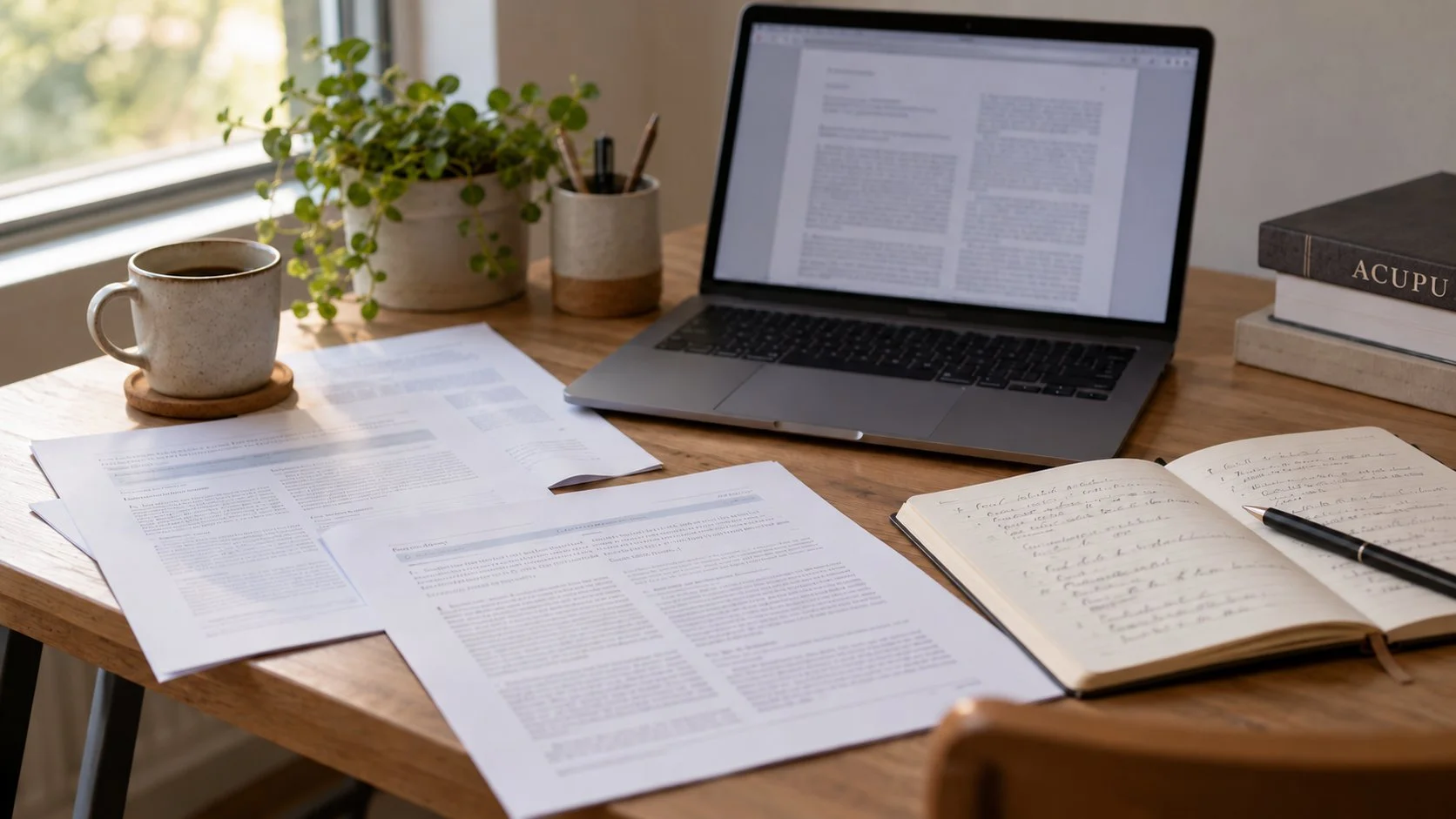
What does the research actually tell us?
Acupuncture has been studied extensively, but not all research is of equal quality, and studying it can be complicated.
Researchers may compare acupuncture with no treatment, usual medical care, another treatment or a sham procedure designed to resemble acupuncture. These comparisons can produce different results.
It's also necessary to consider what researchers are measuring. Are they looking at pain levels, symptom frequency, physical function, medication use or quality of life?
An improvement in one measure doesn't necessarily mean someone has recovered from an underlying condition.
How much improvement are we talking about?
This is one of the most important questions, and it's sometimes overlooked.
You may read that a study found a statistically significant benefit. That doesn't automatically mean the benefit was large enough to make a meaningful difference to someone's everyday life. A small average improvement across hundreds of participants may be worthwhile for some people, while making little practical difference to others.
For example, a 2025 Cochrane overview of treatments for low back pain reported that, for chronic non-specific low-back pain, at short-term follow-up, up to three months, acupuncture probably produces a small improvement in function compared with sham acupuncture. Compared with no treatment, it probably produces a medium reduction in pain and a small improvement in function; compared with usual care, a small improvement in function.
These are average findings from specific comparisons, not predictions about what will happen to an individual patient. They also don't establish that acupuncture cures the underlying cause of back pain.
The questions are not just whether an effect was detected, but how large it was, how certain the findings are, and whether the improvement is clinically meaningful.
Why can acupuncture research be difficult to interpret?
Interpreting research responsibly can be just as challenging as conducting it.
Research design, funding, potential conflicts of interest, risk of bias and the way results are analysed all matter. So do studies with negative or inconclusive findings. Finding one positive study is not the same as critically assessing the whole body of evidence.
As a registered practitioner, I read research relevant to my clinical work. However, clinical experience doesn't automatically make someone a specialist in systematically evaluating research or deciding whether it supports a particular advertising claim.
Research is also an ongoing process. New findings may strengthen, qualify or change earlier conclusions. I think practitioners have a responsibility neither to overstate nor understate what the evidence tells us.
Why am I careful about making treatment claims?
As a registered Chinese medicine practitioner, I have obligations under the National Law and the Australian Health Practitioner Regulation Agency (Ahpra). Public advertising about regulated healthcare must be accurate, balanced and supported by acceptable evidence.
The evidence needed to support therapeutic claims in advertising is not necessarily the same as the evidence considered during clinical decision-making. An individual consultation allows us to discuss the research, its uncertainties and how it relates to your circumstances.
The Acupuncture Evidence Project, published by the Australian Acupuncture and Chinese Medicine Association, illustrates this distinction. Although it reviewed a substantial body of research, the association specifically advises that its findings should not be relied upon to substantiate advertising claims.
That doesn't mean the research has no value. It means that citing a study or review isn't, by itself, enough to justify a broad claim about treatment effectiveness.
This is one reason I generally describe the services I provide and the concerns people bring to the clinic, rather than make promises about particular outcomes.
Does this apply to Chinese herbal medicine and cupping too?
Yes. Research concerning acupuncture doesn't automatically establish the effectiveness of Chinese herbal medicine, cupping or moxibustion. Each approach has its own evidence, limitations and possible risks.
For example, herbal medicines may interact with prescribed medications, which is one reason I ask about your medical history and current treatments.
How do we decide whether treatment is appropriate for you?
When someone comes to see me, I begin by listening to what's happening with their health.
We discuss symptoms, medical history, any diagnoses they've received, treatments they've already tried and what they would like to achieve.
I can then explain whether I think acupuncture or another Chinese medicine approach is reasonable to consider, what the evidence and its limitations suggest, and any relevant risks or alternatives.
You can also read more about the safety and risks of acupuncture, including possible side effects and informed consent.
Sometimes another treatment, or a discussion with a GP or another health professional, may be more appropriate.
If we decide to proceed, I think it's important to be clear about what we're hoping to achieve and how we'll assess whether treatment is worthwhile, rather than continuing appointments without a clear reason.
A conversation, not a promise
I see people with a wide range of health concerns, but that doesn't mean I claim acupuncture or Chinese medicine can effectively treat every condition they bring to the clinic.
I prefer to discuss possible treatment options and realistic expectations after I've had an opportunity to understand someone's individual circumstances.
If you're unsure, you're welcome to call the clinic on (03) 9041 6569. I'm happy to have a brief conversation, answer general questions and help you decide whether arranging a consultation makes sense. A telephone conversation can't replace a proper assessment, but it can be a useful starting point.
You can also read more about acupuncture at Coburg Chinese Medicine or book an appointment online.
Further reading
These resources offer different perspectives on acupuncture research. They're provided for general information, not as proof that a treatment will work for an individual.
Ahpra — Guidelines for advertising a regulated health service
Australian Acupuncture and Chinese Medicine Association — Acupuncture Evidence Project (2017)
Cochrane — Overview of non-medicine treatments for low-back pain (2025)
British Acupuncture Council — Evidence A–Z
Acupuncture Now Foundation — Research resources (an acupuncture education and advocacy organisation)