

Chrysanthemum and Goji Berry Tea
A simple floral tea from the Chinese medicine kitchen
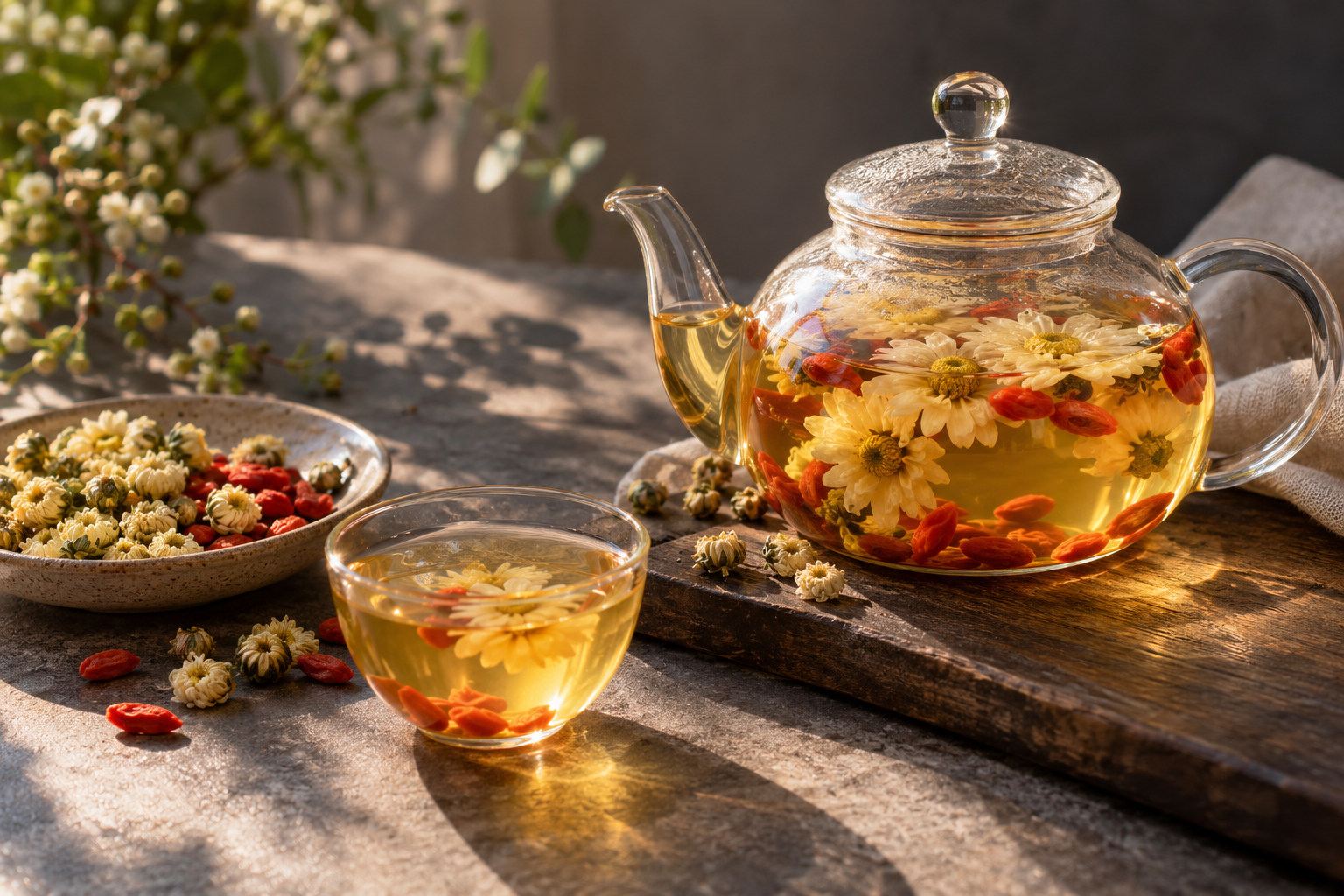
Some of the ingredients used in Chinese herbal medicine also have a long history in everyday cooking and tea drinking. Chrysanthemum flowers and goji berries are a lovely example.
This traditional combination, known as Ju Hua Gou Qi Cha (菊花枸杞茶), produces a light golden tea with a delicate floral flavour and just a little sweetness from the berries.
It's easy to prepare, contains no tea leaves or added caffeine, and looks particularly lovely in a glass teapot, where you can watch the dried flowers open as they steep.
Two familiar ingredients in Chinese medicine
Chrysanthemum — Ju Hua (菊花)
Chrysanthemum flowers have been used in Chinese herbal medicine and tea drinking for centuries.
In traditional Chinese medicine, chrysanthemum is described as having a cooling quality and is associated with the Liver system and the eyes. These are traditional concepts used to describe the herb's place within Chinese medical theory, rather than established medical effects of drinking chrysanthemum tea.
As a tea ingredient, chrysanthemum contributes a gentle floral aroma and a slightly earthy flavour. for more information about crhrysanthemum see our article here
Goji berries — Gou Qi Zi (枸杞子)
Goji berries, also called wolfberries, are another familiar ingredient in Chinese herbal medicine and Chinese cooking.
Traditionally, they are described as nourishing Liver and Kidney Yin. In the kitchen, they're also valued for their mild sweetness and are commonly added to soups, congee and herbal teas. They are also amazing when covered in chocolate - perfect for that craving
Paired with chrysanthemum, they soften its floral flavour and add a little colour. This tea can be a brilliant summer option for those long hours at work on the computer or even just a nice wind down in the evening.
How to make chrysanthemum and goji berry tea
Makes: 1 cup
Preparation: About 10 minutes
Ingredients
5–10 food-grade dried chrysanthemum flowers
1 Teaspoon dried goji berries
250 ml hot water
A little honey or rock sugar, optional
Method
Briefly rinse the chrysanthemum flowers and goji berries in cool water.
Place both ingredients in a heatproof teapot or jug.
Pour over the freshly boiled water, allowed to cool slightly.
Cover and steep for 5–10 minutes, until the flowers have opened and the tea is a pale golden colour.
Pour into cups, straining if preferred. Add a little honey or rock sugar if you'd like it sweeter.
The flowers and berries can usually be steeped again for a second, milder pot.
You can enjoy the tea warm, or allow it to cool for a refreshing drink on a warmer day.
A little more about Chinese dietary traditions
One of the things I enjoy about Chinese medicine is the connection between food, seasonal habits and everyday life.
Traditional Chinese dietary medicine considers not only the nutritional content of ingredients, but also their flavours, preparation and qualities within Chinese medical theory.
That doesn't mean every traditional food is a medicine, or that a cup of tea should be used to treat a health condition. Sometimes it's simply a pleasant way to explore ingredients and food traditions that have been passed down over generations.
Chrysanthemum and goji berry tea is a particularly accessible place to start.
Where to find the ingredients
Look for food-grade dried chrysanthemum flowers and dried goji berries at Chinese grocery shops, Asian supermarkets or suitable specialty food stores.
Choose products intended for consumption, rather than ornamental chrysanthemums or flowers intended for floristry.
A note about herbal safety
Natural ingredients aren't necessarily suitable for everyone.
Goji berries have been reported to interact with warfarin, a prescription blood-thinning medication. Anyone taking warfarin should avoid goji-containing herbal drinks unless their treating clinician has advised otherwise.
People with allergies to chrysanthemums, daisies or related plants should avoid chrysanthemum tea. If you're pregnant, breastfeeding, taking medication or managing a medical condition, check with an appropriate health professional before regularly consuming herbal preparations.
The traditional descriptions in this article are provided for cultural and educational interest, not as claims that the tea prevents or treats disease.
From the Chinese Medicine Kitchen is a collection of simple recipes and traditional food ideas shared by Coburg Chinese Medicine.
If you're curious about Chinese herbal medicine and how it differs from everyday herbal teas, you can read more on our Chinese herbal medicine page.
Quisque iaculis facilisis lacinia. Mauris euismod pellentesque tellus sit amet mollis.