Gua Sha in Melbourne
Gua sha is a traditional Chinese medicine massage technique that involves moving a smooth-edged tool across the skin, usually with some oil applied to help it glide. Gua sha and related scraping techniques have a long history in parts of China, including the southwest, and Southeast Asia, particularly Vietnam and Cambodia. It's sometimes described as scraping or spooning.
In my practice, gua sha is typically used as part of an acupuncture or cupping consultation when I think it may be appropriate. Some patients are already familiar with the technique and interested in trying it, while others may never have heard of it.
Interested in gua sha? You're welcome to ask about it when booking an acupuncture or cupping consultation at my clinic, located in Melbourne's northern suburb of Coburg. Book an appointment online, and we can discuss whether gua sha would be appropriate to include.
How is gua sha performed?
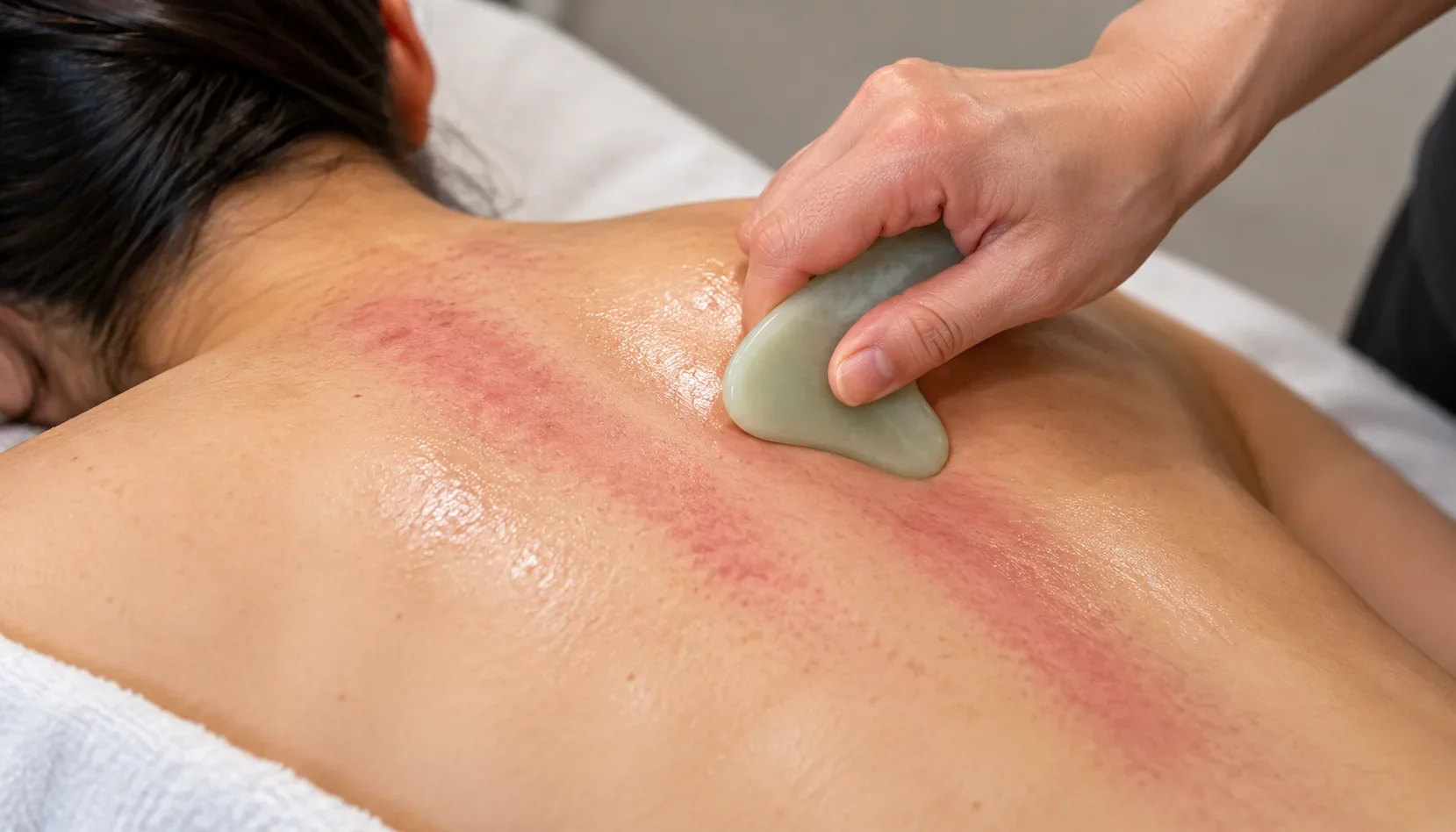
Gua sha is performed using a smooth-edged tool, traditionally including ceramic spoons and other rounded implements. Oil is applied to reduce friction, and the tool is moved across the skin using a series of controlled strokes.
The back and tops of the shoulders are common areas for treatment because they're accessible and relatively straightforward to work on. Areas with a lot of body hair can be particularly uncomfortable, as the tool may pull on the hair.
Does gua sha hurt?
It's worth being upfront about this: gua sha can be uncomfortable, but the procedure usually only takes a few minutes, so it's over fairly quickly.
The repeated strokes create pressure and friction against the skin, and the treated area may feel warm or tender afterwards.
I'll check how you're feeling throughout the procedure. If the pressure is too uncomfortable, the technique can be adjusted or stopped.
Why is gua sha used in Chinese medicine?
Gua sha has a long history in Chinese medicine and is traditionally applied to areas such as the back, neck and shoulders, particularly when people experience muscular tightness or discomfort.
Traditional Chinese medicine describes the technique using concepts such as the movement of qi and blood. These belong to the traditional theoretical framework and shouldn't be confused with established physiological explanations or proof of clinical effectiveness.
Although gua sha has been investigated in clinical research, the evidence remains limited regarding its effectiveness for particular conditions.
What are the red marks left by gua sha?
One of the distinctive features of gua sha is the appearance of red, sometimes purple, marks on the skin.
These occur because the pressure and friction involved can affect small superficial blood vessels. The marks may resemble bruising and generally fade over several days, although the time varies.
The marks aren't evidence that toxins are being released from the body, despite that explanation sometimes appearing in descriptions of the technique.
It's worth considering their appearance before treatment, particularly if the area would normally be visible.
Is gua sha the same as cupping?
Although gua sha and cupping are both traditional Chinese medicine techniques, they're performed differently.
Cupping involves suction applied to the skin using cups. Gua sha uses pressure and movement from a smooth-edged tool. Both can leave temporary marks, but the sensations and appearance can differ.
Gua sha is also different from acupuncture, which involves the insertion of fine needles.
What about facial gua sha?
Facial gua sha has become popular in skincare, particularly through social media, where it's often demonstrated using small stone tools and relatively light pressure.
The traditional body technique described here is different from cosmetic facial gua sha. Claims that facial gua sha can permanently reshape facial features or produce dramatic anti-ageing effects should be treated cautiously.
Is gua sha suitable for everyone?
Not necessarily. Gua sha shouldn't be applied over broken, irritated or infected skin. Excessive pressure can also irritate or damage the skin.
It's important to discuss relevant medical conditions and medications beforehand, particularly if you bruise easily, take blood-thinning medication or have a bleeding disorder.
I'll consider your individual circumstances before deciding whether to use the technique.
Interested in trying gua sha?
You don't need to book a separate gua sha appointment. If you're interested, you're welcome to mention it when arranging your consultation.
Book an acupuncture or cupping appointment online
You can also read more about acupuncture, cupping, or consultation fees and opening hours.
Coburg Chinese Medicine is located on Sydney Road in Coburg, Melbourne.